
#Prevención de la mutilación genital femenina
Archivo
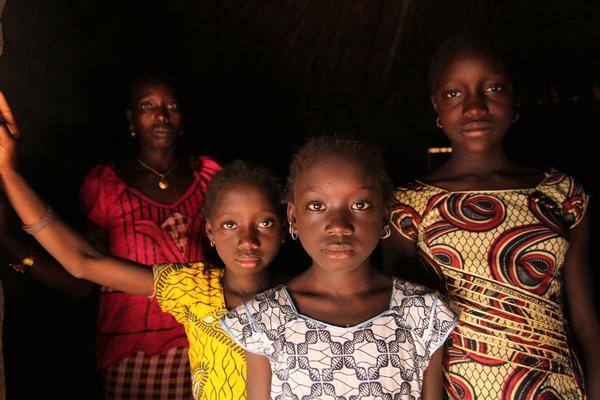
A woman and her daughters stand in their home, in the village of Cambadju in Bafatá Region. Their village is the first in the country to renounce female genital mutilation/cutting (FGM/C). The harmful traditional practice, which can result in irreversible, life-long health and other complications, as well as psychological harm, was renounced in the village that same day, during a ceremony organized with support from the international NGO Tostan, a UNICEF partner. The event was attended by girls and young women, former traditional cutters, delegates from youth and women’s groups, government officials and others. Between 2006 and 2010, the percentage of girls and women aged 15 to 49 years of age subjected to FGM/C in Guinea-Bissau increased from 45 per cent to 50 per cent – and reached 94 per cent in eastern parts of the country. Together with Tostan and other partners, UNICEF supports interventions that help communities decide for themselves to renounce the practice. In November/December 2012 in Guinea-Bissau, a vaccination campaign against measles was held as part of an effort by the Government and the Measles & Rubella Initiative, a multi-partner effort led by the American Red Cross, the United Nations Foundation, the United States Centers for Disease Control and Prevention (CDC), the World Health Organization (WHO) and UNICEF. In Guinea-Bissau, political instability and deep poverty continue to contribute to limiting economic and social development. The country has the seventh-highest under-five mortality rate in the world, despite a decline (from 210 to 161 deaths per 1,000 live births) from 1990 to 2011, and maternal mortality is also high. One-third of the population and half of all rural inhabitants lack access to safe water. More than 80 per cent of the population have no access to sanitation. Cholera continues to be endemic, and HIV prevalence is 5.3 per cent among adults, with women disproportionately affected. Wide economic, gender and other dispar