
#Desarrollo infantil
Archivo
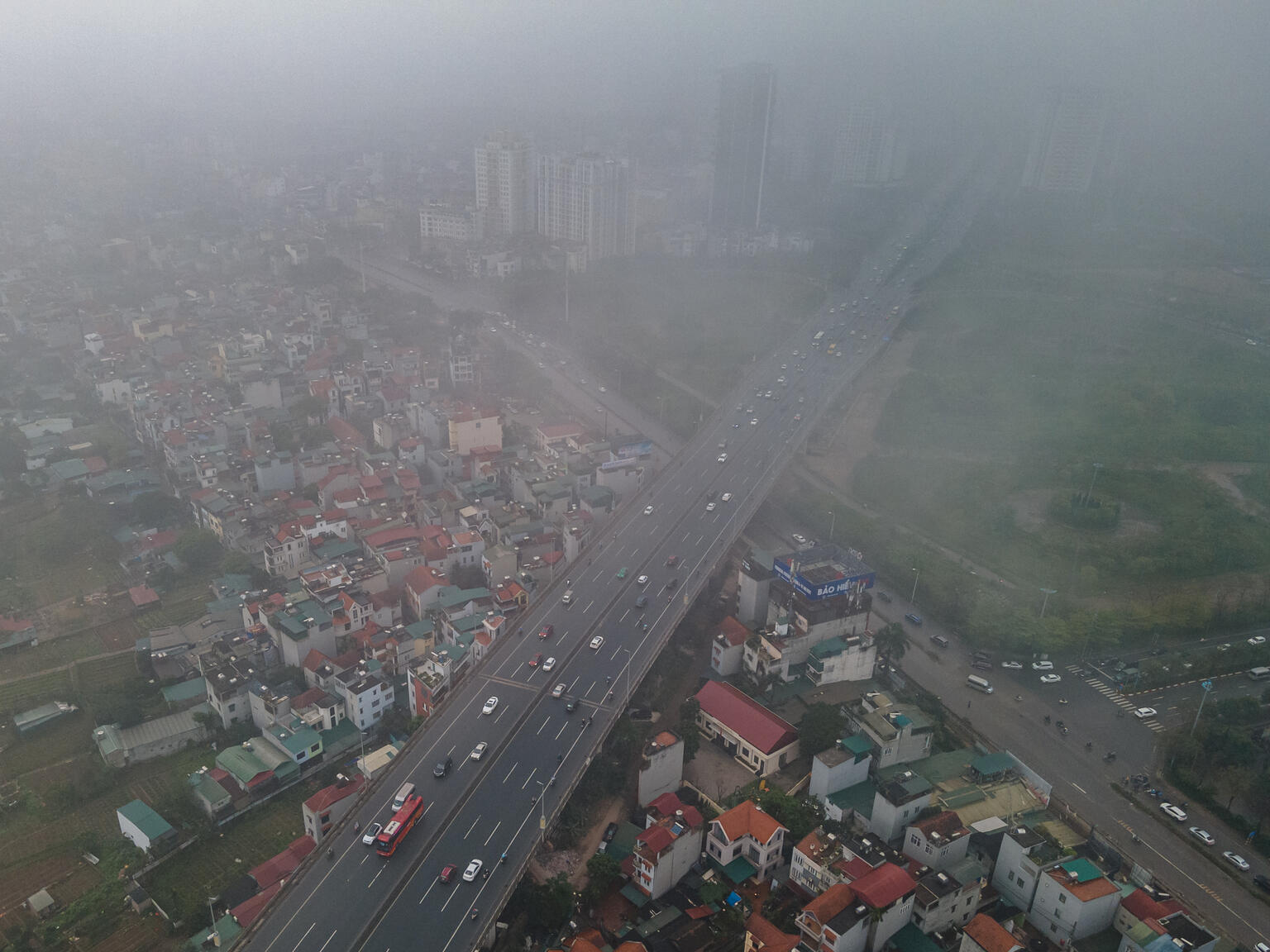
Aerial view of Ha Noi city, Viet Nam, with limited visibility due to air pollution, photographed on 28 March 2024. Air pollution in Viet Nam stems from various sources including an aging vehicle fleet, coal power plants, industrial activities, indoor coal and biomass cooking stoves, ineffective waste management practices and agricultural practices. The latest annual report from the Swiss organization IQAir reveals that in 2023, Viet Nam ranked as the country with the second most polluted air in Southeast Asia, following Indonesia, and 22nd globally. Ha Noi, the capital city, was ranked the 8th most polluted city worldwide, closely trailing Jakarta. The country saw a nearly 9% increase in PM2.5 levels, returning to pre-pandemic levels, with Hanoi experiencing escalating concentrations. Air pollution in Viet Nam stems from various sources, including vehicle emissions, coal power plants, industrial activities, and agricultural practices like burning rice straw. Despite efforts to mitigate pollution, air quality issues persist, affecting public health, business operations, and agriculture. The ongoing smog in Hanoi prompts health concerns, with respiratory illnesses increasing among residents. Experts emphasize the need for emission control measures, public transport development, and stricter oversight of industrial activities to address the issue. Efforts to combat air pollution include incentivizing clean production models, urban afforestation, and relocating universities and offices to free up space for green areas. Reported by VNS Mar 22, 2024 https://bit.ly/3UFULYZ