
#Conflicto de Ucrania
Archivo
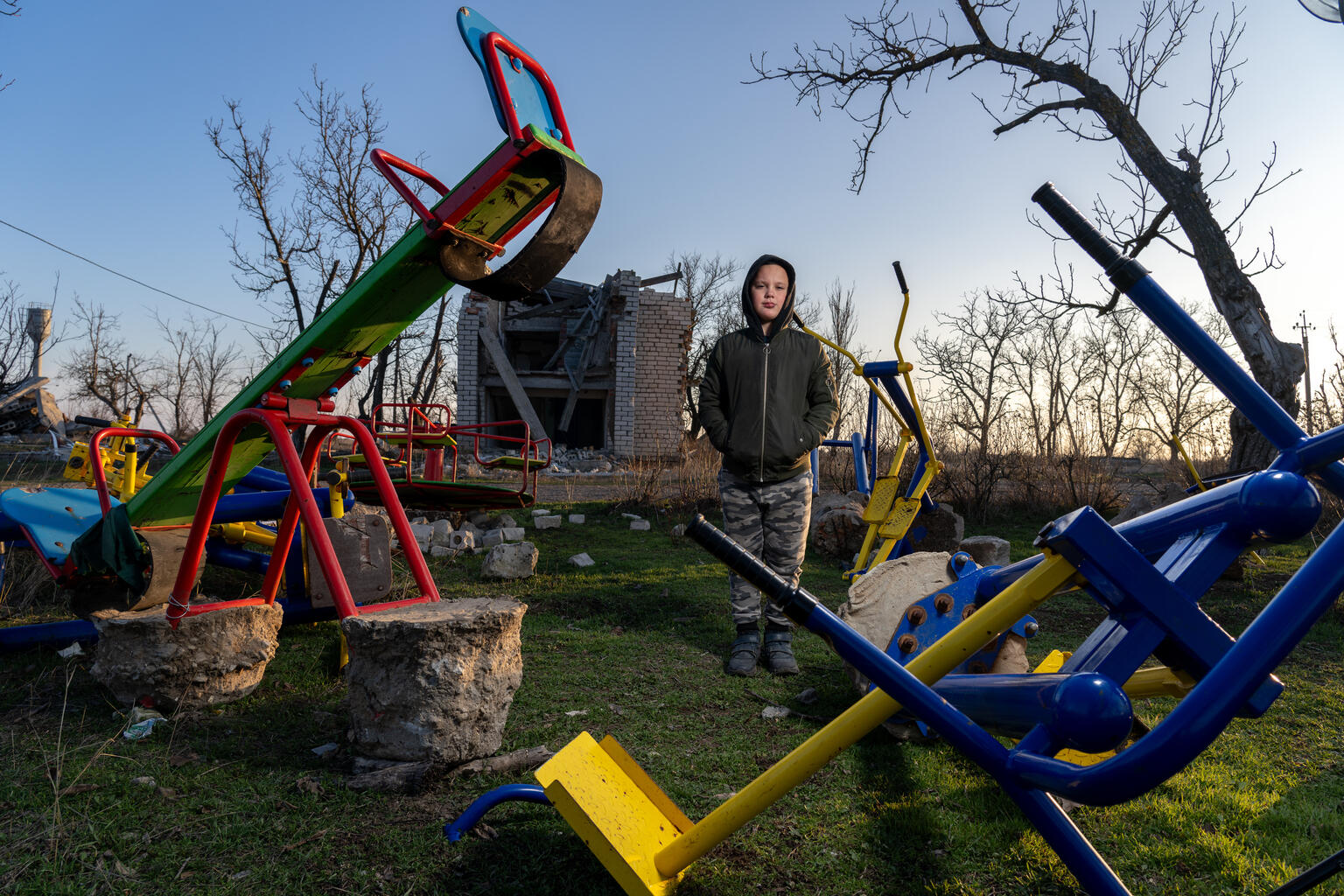
Timofii, 11 years old, stands in front of the ruins of the kindergarten he once attended in the village of Partyzanske, Mykolaiv region, destroyed by shelling. "It's hard here. I have no friends. The school was destroyed, the kindergarten was destroyed. Everyone has left, and there's no one to play with except my brother. I really want to go to a normal school and for the war to end," says the 11-year-old boy, who lives in a village where not a single house remains undamaged after the fighting. Since February 2022, more than 2,520 children have been killed or injured in Ukraine, and over 1,600 schools have been damaged or destroyed. In villages like Partyzanske and Kobzartsi in the Mykolaiv region, where over 80% of homes are in ruins, children like Timofii, David, Alina, and Roma struggle to find normalcy. Nearly 40% of Ukrainian children now study only online or through blended formats, facing an average learning loss of two years in reading and one year in maths. The lack of safe schools, ongoing displacement of 3.7 million people within Ukraine, and widespread damage to infrastructure leave many children without access to education, healthcare, and stable living conditions. While UNICEF and partners provide support with winter clothing, hygiene kits, and learning resources, the need for sustained humanitarian assistance remains urgent. Every child in Ukraine deserves the right to safety, education, and a future beyond war.